Circular Economy: Our Reason for Being
Since 2002, before the concept existed, PrecisionTex has been closing the textile cycle by transforming waste into resources. Discover our integrated process that combines recovery, sorting, mechanical and chemical processing, certification and reintegration into the production chain.
What is Textile Circular Economy?
The textile circular economy is a regenerative model that keeps materials in use for as long as possible, extracting their maximum value and recovering them at the end of their useful life to create new products. This model radically contrasts with the traditional linear economy (extract-produce-dispose) that has dominated the textile industry for decades.
- Design for Durability and Recyclability: Create products that last longer and are easy to recycle.
- Extended Use: Maximize useful life through repair and reuse.
- Material Recovery: At end of life, recover fibers to create new products.
- Waste Elimination: The ultimate goal is that the concept of "garbage" does not exist.

Our Circular Economy Model
Post-Industrial Recovery
We specialize in pre-consumer waste (garment clips, waste) generated in textile factories. We operate collection networks in Europe, Asia and America, turning what was once waste into valuable raw material.
Specialized Sorting
Critical sorting by composition (cotton, polyester, blends), color (avoiding additional dyeing) and quality. 25 years of expertise in our plants in Spain, Bangladesh and Central America.
Advanced Processing
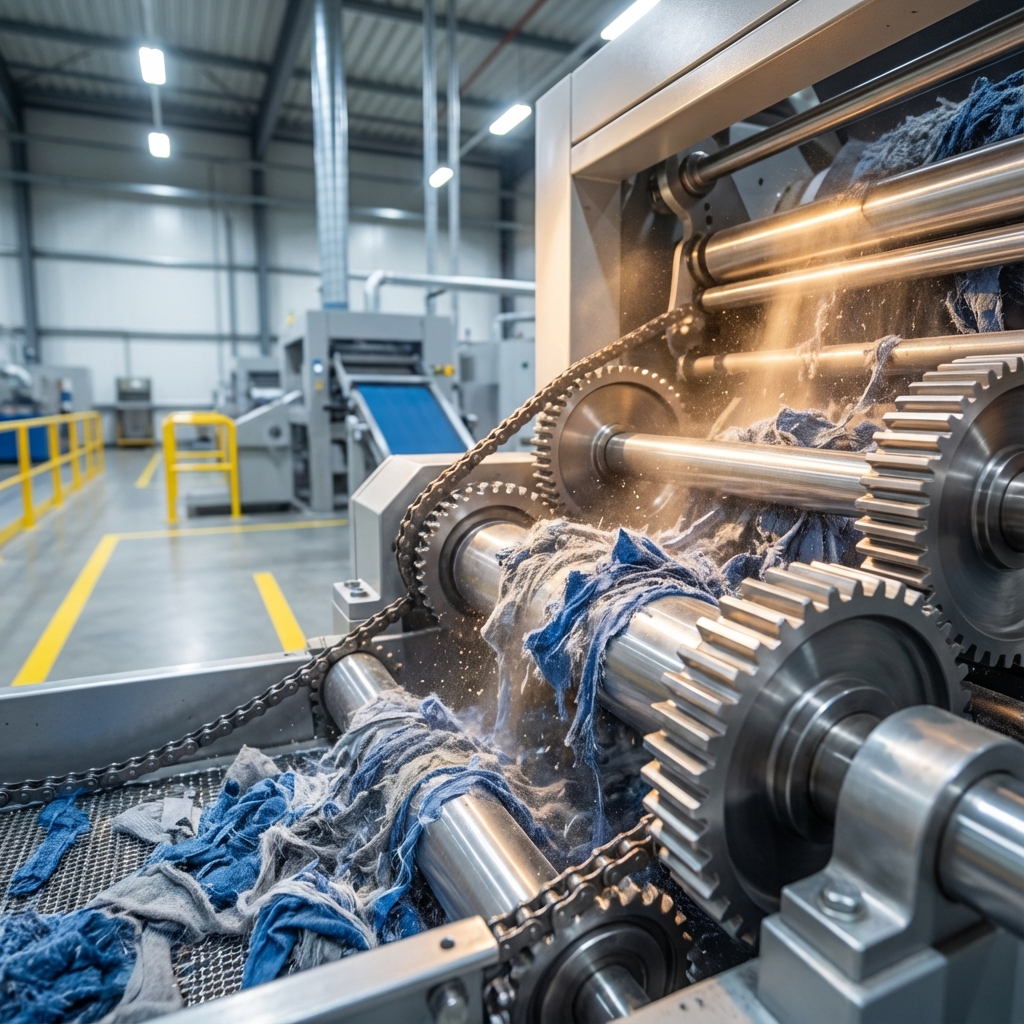
Mechanical: Shredding and carding for respinnable loose fiber. Chemical: Depolymerization and repolymerization for maximum quality in complex materials.
Certification and Reintegration
GRS (Global Recycled Standard) certification guaranteeing complete traceability. Supply to spinners, non-woven manufacturers and filling producers to close the cycle.
Benefits of Circular Economy
Environmental
- Water Savings: ~10,000 liters saved per kg of recycled cotton.
- Less Petroleum: -70% consumption in recycled polyester.
- Energy: -60% energy consumption in synthetics.
- CO₂: Up to 65% reduction in emissions.
- Chemical-Free: Total elimination of agricultural pesticides.
- Waste: Less landfills and incineration.
Economic
- Employment: Creation of local jobs in sorting and processing.
- Costs: Competitive prices vs virgin materials.
- Security: Less dependence on volatile raw materials.
- Innovation: Driving new recycling technologies.
Social
- Public Health: Less chemicals and harmful emissions.
- Working Conditions: GRS standards guaranteed.
- Awareness: Environmental education for consumers and companies.
Our Commitment
PrecisionTex and OnFibers are committed to circular economy as a fundamental business model. We continuously invest in technology for complex materials, guarantee total transparency with GRS certification, collaborate closely with the entire value chain and share our knowledge to drive the global industry.
Join the Circular Economy
Is your company ready to integrate certified recycled fibers?
PrecisionTex offers the expertise, capacity and certification
needed for your sustainability goals.